Wildlife lives with the increasing burden of plastics in the environment. We often think of the world having abundant resources for wildlife. Unfortunately, that is not true. The World Wildlife Fund found that wildlife populations of all types have declined by an average of 69% since 1970 (WWF “Living Planet Report”, 2022). Because of our destruction of ecosystems and habitats, many of the world’s species are starving and living in poor circumstances. Waste plastics add to habitat degradation. Consequently, plastic brings suffering and death in many ways. Animals, birds, fish and smaller organisms can be poisoned, entrapped, strangled, or starve from plastic blocking the gut.
Sixth Great Extinction
The world is going through the sixth great extinction of wildlife (Search: “References for the sixth great extinction”). Humanity has put such pressure on the environment that we have affected vast tracts of land and ocean. We have changed many habitats, destroyed others, and reduced the viability of many of the resources that wildlife needs to survive. Starving animals, fish and birds will all eat plastics. While plastic may fill the stomach, it does not provide nutrition. Instead, plastic may block the gut or poison it. Worldwide examples of wildlife deaths from plastic are well researched. (Search: Animal deaths from plastics).
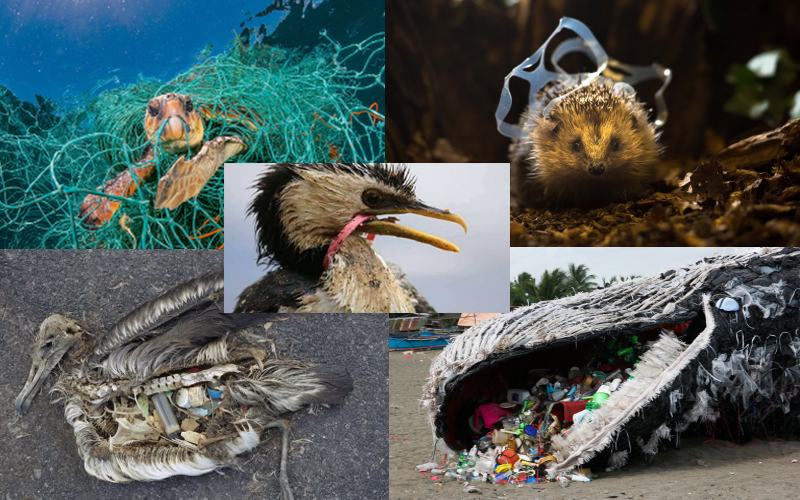
Wildlife is significantly affected by plastics, with animal, bird and fish deaths in their millions worldwide.
Over 100 million marine animals die annually through ingestion or entanglement with plastics. Worldwide estimates suggest over 100,000 marine mammals and 1 million seabirds die this way every year. This is likely to be an underestimate. Counts miss many species and the chronic effects of gut blockage and toxicity. All sea turtle species and many other marine organisms are affected, often starving to death after their stomachs fill with plastic or from internal injuries. Even small amounts can prove lethal for some species.
Plastic use rises, plastic contamination soars
Plastic production has increased by 200 times since the 1950s. Production is expected to nearly triple to over a billion tonnes per year by 2060. This rise has caused plastic waste in the natural environment to soar. Eight billion tonnes of plastic now contaminate the Earth across all environments. While at the same time, less than 10% of plastic is recycled.
Plastics inevitably break down in nature. Abrasion, impacts, and breakages all produce smaller pieces down to tiny particles. Small plastic particles, called microplastics, are smaller than 5 millimetres (mm). The tiniest particles, called nanoplastics, are also widespread. They are particles that range from 1 to 1000 nanometers in size. These are so tiny they can (and do) penetrate all organs of an animal’s body, and human bodies. Around our own coasts, as one example, shrimps commonly ingest microplastics. These block their guts and eventually kill them.
Is Human Health Affected?
Shrimps and many other animals commonly ingest plastics. Those animals are then eaten by humans, who also ingest their nanoplastics. In fact, studies show that nanoplastics are commonly found in human bodies throughout all organs. While the impact is uncertain, some studies correlate nanoplastics with a variety of disease deaths in humans. (For more, search “What diseases do microplastics cause in humans”).
Research on the impact of micro and nanoplastics is in its infancy. The full impact of plastic on our bodies is unclear, but the corpus of research is growing rapidly. Further, history shows that where we ingest exotic chemicals, the outcome is frequently damaging. So, we should be concerned about the health issues. (See: https://www.sciencenews.org/article/microplastics-human-bodies-health-risks)
How do plastics enter our bodies
Micro and nano plastics enter the bodies of animals and humans in a variety of ways…
Ingestion (through the mouth and gut):
- Food & Water: Found in seafood, salt, beer, bottled water, fruits, and vegetables.
- Packaging: Migrating from plastic containers, bottles, and wraps.
- Dust: Settling on food surfaces from indoor and outdoor sources.
Inhalation (Via the nose and lungs):
- Airborne Fibres: Shed from synthetic clothes (polyester, nylon) during washing, drying or wear.
- Environmental Dust: From urban areas, landfills, and agricultural fields.
- Vehicle Emissions: Tiny particles from tyres.
Skin Contact:
- Cosmetics & Personal Care: Nanoplastics in cosmetics, personal care products, and clothing can potentially penetrate the skin. Microbeads are in some products.
- Clothing: Direct skin contact with synthetic fabrics.
- Entry Points: Can enter through sweat glands, hair follicles, small cuts, or abrasions, potentially reaching the bloodstream.
Nanoplastics can travel
Nanoplastics appear all over the body…
- Intestines: Larger microplastics are often excreted, but nanoplastics (<1 µm) can cross the gut lining into the bloodstream.
- Bloodstream: Once in the blood, they can travel throughout the body.
- Lungs: Inhaled particles can lodge in lung tissue.
- Brain: Nanoplastics are small enough to cross the blood-brain barrier, potentially impacting neurological health.
- Placenta & Breast Milk: Studies have found nanoplastics in human placenta and breast milk, raising concerns for infants.
Microplastics are linked to potential health issues like cancer, heart disease, metabolic disorders, and reproductive problems. Initial research shows the primary effects are from inflammation, complex chemical interactions (especially around hormones), oxidative stress, and DNA damage. Of course, definitive human disease studies are still at an early stage. This is a complex field. Evidence is still emerging. One thing is certain: we are likely to find that plastics will do some damage to our bodies. (For more, search: “What are the Potential Diseases & Conditions Linked to Microplastics?”).
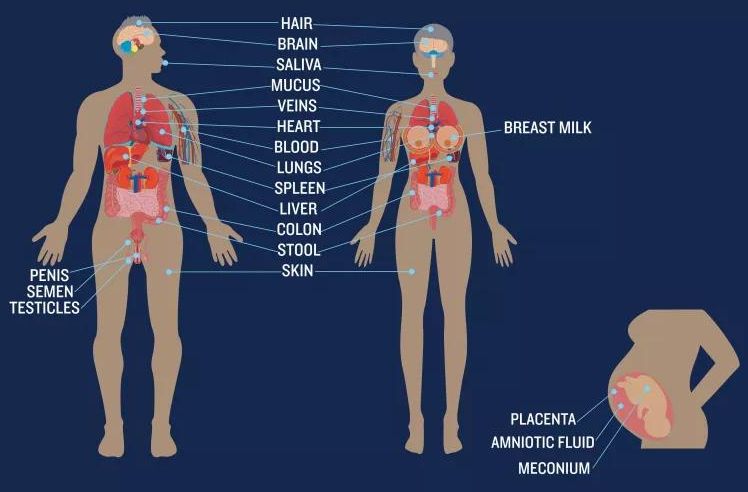
The image shows where plastics are found in human bodies. Image from the BBC.
A benefit and a blight
Since the 1950s, plastic has both benefited humanity and become a blight. Undoubtedly, plastics are of widespread usefulness. However, they have a huge impact on the natural world and us. Similarly, past widespread chemical releases have also had substantial impacts. Examples will give us a context.
DDT, a pesticide
For instance, the widespread use of DDT, a pesticide, is recognised to have devastated birds of prey populations. This chemical was phased out in the 1970s. These populations are recovering today. However, that has required heavy investment in conservation, breeding and reintroduction programs. Today, in the Chilterns, we are seeing the fruits of that. The local red kite population has grown substantially since its reintroduction here in 1989.
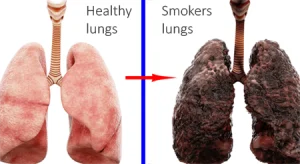
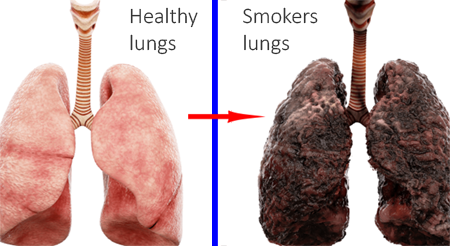
The pink, healthy lungs (left) transform into ugly, grey and scarred lungs of a 10 yr smoker (right). Smoking is proven to cause fatal cancers.
Smoking
Today, smoking still kills around 8 million people a year worldwide. The exotic chemicals inhaled from tobacco cause smoking-related illnesses. These Illnesses cost English taxpayers approximately £2-£2.6 billion annually. In addition, the broader societal costs (lost productivity, social care, fires, and informal care) reach over £40 billion. (Search: “Cost to the NHS of smoking”).
Ozone layer damage
Chlorofluorocarbons (CFCs) were once widely used as refrigerants, propellants, and solvents. They caused severe damage to Earth’s ozone layer and contributed to climate change. CFC damage to the ozone layer increased the ultraviolet radiation reaching ground level, causing skin cancers and dangerous sunburns. CFCs were phased out globally under the Montreal Protocol. Today, the ozone layer is gradually recovering.
Long-term impacts
Plastics seem to be the latest in a long line of environmental chemical errors.
We are in the first flush of finding the health problems with plastic. Typically, widespread chemical releases have long-term impacts with uncertain outcomes. Today, we are finding new ways to use plastic, and production is growing rapidly. As a result, we will see further environmental and health issues over the coming decades.
Plastic is exclusively manufactured from fossil fuels, primarily oil. Plastic production accounts for about 17% of oil production. In fact, a whole range of products derive from fossil fuels. All eventually put noxious chemicals and carbon dioxide back into the environment. Oil is the top man-made contributor to climate change today. As we extract more oil, the rate of plastic production climbs. So, we should be finding ways to substitute other materials for plastics and other fossil fuels.
What can I do?
We should look for ways to replace plastic and to alert others to the issues and harms. The most damaging waste is from single-use plastics. These include plastic bags, straws, cutlery, food & drink containers (like cups, lids, takeaway boxes), stirrers, cotton buds, packaging & wrappers (crisp packets, sachets) and bottle caps. All of these become waste that harms the environment. Most are replaceable with reusable or recyclable glass, bamboo, paper, metals or other natural materials.
As a consumer, you can buy products that do not use disposable plastics and find ways to reduce plastic waste. Try to focus on a cycle of “Refuse, Reduce, Reuse, and Recycle“. Here are a few simple steps to take…
- Reuse plastic items to avoid discarding them.
- Refuse single-use plastics (straws, bags, cutlery),
- Avoid plastic-wrapped food (a major source of plastic particles in bodies).
- Never cook in plastic containers (a major source of nanoplastic ingestion).
- Pick loose produce and bulk items in reusable containers,
- Choose reusables (bottles, cups, bags, containers),
- Use solid toiletries (avoid liquids with plastic supplements/containers),
- Buy secondhand plastic items where you can,
- Find ways to recycle or upcycle products you own,
- Seek out refillable packages, stop using disposables.
- Choose items with minimal or recyclable packaging.
You can easily make these changes.
Plastics are increasingly damaging the environment, wildlife and possibly our own bodies.
To stop plastic causing a wider disaster, we all have a duty to reduce our use and, where possible, our intake of plastics.


 More…
More…